
Standardization of tests for novel cannabinoids: challenges
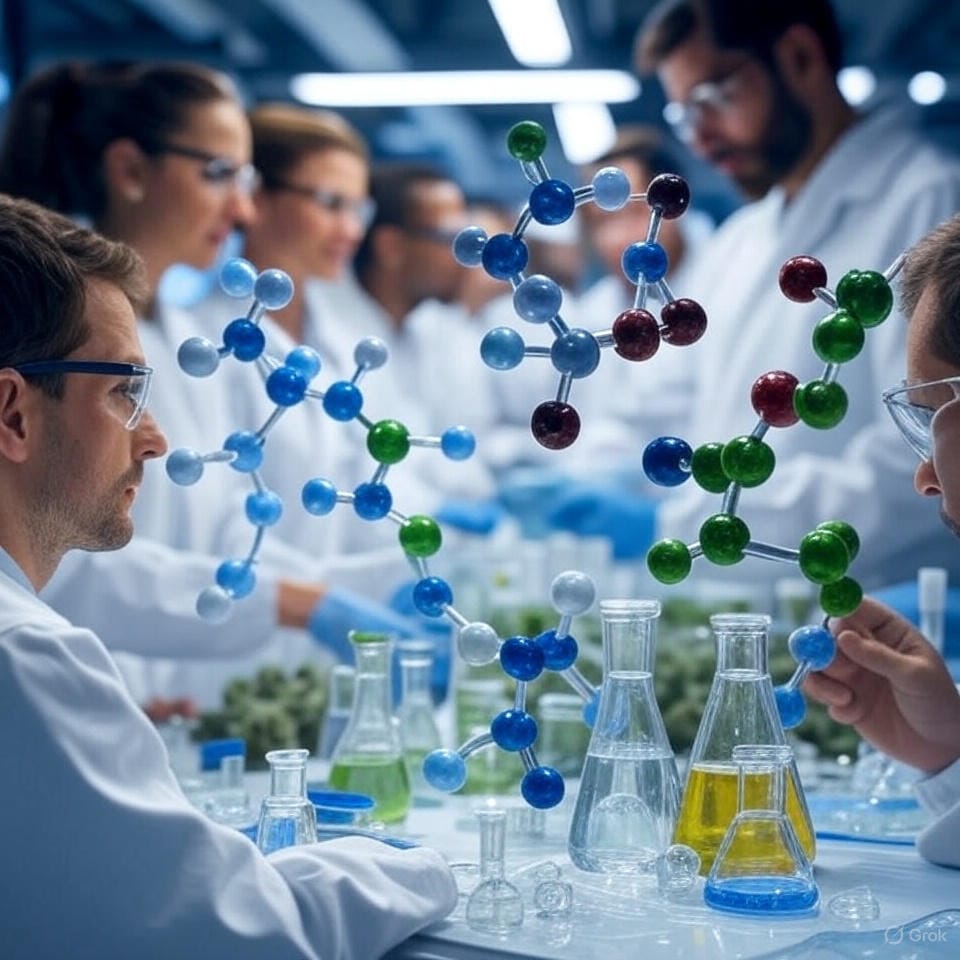
CHALLENGES IN STANDARDIZING TESTS FOR NEW CANNABINOIDS (CBG, CBN, DELTA-8)
Introduction
The growing interest in cannabis-derived cannabinoids, such as cannabigerol (CBG), cannabinol (CBN) and delta-8-tetrahydrocannabinol (Delta-8 THC), has driven the need to develop accurate and standardized analytical methods for their detection and quantification. These compounds, less studied than tetrahydrocannabinol (THC) and cannabidiol (CBD), present promising therapeutic properties, but their analysis faces multiple technical, regulatory, and scientific challenges. This article explores the main obstacles in standardizing testing for these new cannabinoids, drawing on recent research and reliable scientific sources.
New Cannabinoids Context
Cannabinoids are chemical compounds that interact with the endocannabinoid system of the human body, producing various physiological effects. While THC and CBD are the best known, CBG, CBN and Delta-8 THC are gaining attention due to their potential medicinal and recreational applications:
- Cannabigerol (CBG): Known as the “mother cannabinoid”, it is the precursor of THC, CBD and other cannabinoids. It is found in low concentrations in the cannabis plant, which complicates its extraction and analysis. Studies have shown that CBG may have anti-inflammatory, antibacterial and neuroprotective effects.
- Cannabinol (CBN): A breakdown product of THC, formed by oxidation due to exposure to heat, light or oxygen. Although mildly psychoactive, it is associated with sedative and anticonvulsant effects, but its low concentration in fresh plants makes it difficult to study.
- Delta-8 THC: An isomer of Delta-9 THC, with milder psychoactive effects. It can be of natural or synthetic origin, which poses additional challenges in its regulation and analysis, especially since it is often produced from CBD by chemical processes.
The growing popularity of these compounds in commercial products, such as oils, edibles and vaporizers, has increased the demand for reliable analytical methods to ensure their safety, quality and accurate labeling.
Technical Challenges in Test Standardization
1. Variability in Concentrations and Matrices
One of the biggest challenges is the low concentration of CBG and CBN in cannabis plants, which makes their detection and accurate quantification difficult. For example, CBG is usually present in concentrations below 1% in most cannabis strains, while CBN increases in aged or poorly preserved products. This variability requires highly sensitive analytical methods, such as high performance liquid chromatography (HPLC) or gas chromatography mass spectrometry (GC-MS).
In addition, commercial cannabis products have complex matrices (oils, creams, edibles, etc.), which complicates the extraction and separation of cannabinoids. The presence of lipids, waxes and terpenes can interfere with analyses, generating false positives or inconsistent results. For example, a comparative study between the Alpha-CAT TLC method and GC-FID showed significant differences in the quantification of CBD and CBN when concentrations were lower than 1%, highlighting the difficulty of detecting traces of these compounds.
Lack of Reference Standards
The identification and quantification of new cannabinoids require certified reference standards, which are pure compounds used to calibrate analytical instruments. However, standards for CBG, CBN and Delta-8 THC are not widely commercially available, making validation of analytical methods difficult. This is particularly critical for Delta-8 THC, as its synthetic production may introduce unidentified impurities or by-products, as was observed in one case where unusual crystals of Delta-10 THC formed due to exposure to fire retardants.
3. Non-standardized Analytical Methods
Multiple techniques exist for analyzing cannabinoids, including thin layer chromatography (TLC), HPLC, GC-MS and capillary electrophoresis, but none are fully standardized for CBG, CBN and Delta-8 THC. For example:
- TLC: It is a useful qualitative method for initial detection, but its accuracy for quantifying low concentrations is limited, as demonstrated in a comparative study that reported differences of up to 48.82% in the quantification of THC and 34.25% for CBD.
- HPLC: It is ideal for detecting acidic (CBGA, THCA) and neutral (CBG, THC) forms separately, but requires expensive equipment and validated methods, which are not always available for new cannabinoids.
- GC-MS: This is the reference technique for many cannabinoids, but can lead to decarboxylation of acid forms, which affects the quantification of CBG and CBN.
The lack of consensus on which technique is most appropriate for each cannabinoid and sample type hinders standardization.
4. Interferences and Contaminants
Cannabis products may contain contaminants such as pesticides, heavy metals, residual solvents and mycotoxins, which interfere with cannabinoid analysis. For example, Delta-8 THC extraction often involves solvents such as ethanol or hydrocarbons, and residues of these compounds can remain in the final product if not properly removed. An analysis of residual solvents by GC-FID is essential, but not all laboratories are equipped to perform these tests.
In addition, the presence of terpenes, which contribute to the aroma and effects of cannabis, can complicate chromatographic separation, especially in methods such as GC-MS, where terpene peaks can overlap with those of cannabinoids.
Regulatory Challenges
Diversity in Legislation
The legality of CBG, CBN and Delta-8 THC varies significantly between countries and regions, which affects the development of analytical standards. In the United States, the Agricultural Improvement Act of 2018 legalized hemp-derived products with less than 0.3% Delta-9 THC, but some states have banned Delta-8 THC due to its partially synthetic nature. This regulatory variability makes it difficult to harmonize testing methods globally.
For example, while CBN is legal in all 50 U.S. states, Delta-8 THC is restricted in several states due to concerns about its synthetic production and lack of regulation. In countries such as Argentina, Law 27.350/2017 establishes a framework for medical cannabis, but does not specifically address new cannabinoids, leaving gaps in testing regulation.
Lack of Official Guidelines
Agencies such as the United States Pharmacopeia (USP) have developed validated methods for THC and CBD, but there are no specific guidelines for CBG, CBN or Delta-8 THC in whole plant materials. The U.S. Food and Drug Administration (FDA) requires cannabis-derived products to meet safety standards, but does not provide clear protocols for testing these new compounds, leaving manufacturers and laboratories in regulatory limbo.
Scientific Challenges
1. Chemical Properties and Biosynthesis
The chemical complexity of novel cannabinoids poses additional challenges. For example, CBG is a key precursor that is transformed into THC, CBD or CBC by specific enzymes, which means that its concentration can vary depending on plant genetics and growing conditions. CBN, on the other hand, is not synthesized directly in the plant, but arises from the degradation of THC, which complicates its quantification in fresh samples.
Delta-8 THC, which can be either natural or synthetic, presents challenges due to its structural similarity to Delta-9 THC. The two compounds may not differentiate in standard screening tests, such as urinalysis, leading to false positives in drug tests.
Limited Research
Although preliminary studies suggest therapeutic benefits for CBG (e.g., in glaucoma and inflammatory diseases) and CBN (e.g., as a sedative), research on these compounds is in its early stages. The lack of clinical and preclinical data limits the development of specific analytical methods, as laboratories need to know the pharmacological and toxicological properties of these compounds to establish appropriate detection limits.
Strategies to Overcome Challenges
- Development of Reference Standards: It is crucial to invest in the production of certified standards for CBG, CBN and Delta-8 THC. International bodies, such as the World Health Organization, could lead efforts to standardize these compounds.
- Validation of Analytical Methods: Laboratories should adopt methods such as HPLC-DAD or UPLC, which allow the separation of acid and neutral forms without decarboxylation. Collaboration with academic institutions can accelerate the validation of these methods.
- Harmonized Regulation: Governments should work on clear guidelines for the production and testing of new cannabinoids, following the example of programs such as the Netherlands’ medical marijuana program, which uses validated methods for quality assurance.
- Comprehensive Quality Control: In addition to analyzing cannabinoids, laboratories must test for contaminants (pesticides, heavy metals, residual solvents) to ensure the safety of the final product.
Conclusion
Standardization of tests for new cannabinoids such as CBG, CBN and Delta-8 THC faces significant challenges due to their low concentration, lack of reference standards, variability of analytical methods and regulatory discrepancies. However, with advances in research, the development of validated methods and more harmonized regulation, it is possible to ensure the quality and safety of cannabis-derived products. Collaboration between scientists, regulators and industry will be key to overcoming these obstacles and harnessing the therapeutic potential of these compounds.
References
- CANNA Foundation. Comparative study for the quantification of THC, CBD and CBN. .
- Data Intelligence Dish. The strange history and promising future of Delta 10 THC.
- CAS. the scientific trends of cannabinoid research .
- Kalapa Clinic. The most important cannabinoids (THC, CBD, CBC, CBG, CBN) and their therapeutic effects. .
- Scielo. Detection and identification of synthetic cannabinoids in solid and biological samples. .
- CANNA Foundation. Towards a better quality of cannabinoid products .
- Scielo. Determination and qualitative comparison of cannabinoids present in commercial natural products. .
- Hempire Innovations. Legality of CBD, CBG, CBN, Delta 8, THC-O, Delta 9 and HHC by state. .
- Zamnesia. CBD, THC and CBG – Exploring Cannabinoids .
- Wikipedia. Cannabinoid .
- Sensi Seeds. Basic Cannabinoid Science Course: What is CBN?%20para%20formar%20CBN.)
- Cientificalitoral. Beyond CBD: what you need to know about CBN, CBG and Delta-8THC .
- FBCB UNL. Quality Control Service for Cannabis Derived Products. .