
Myths and facts about CoAs in cannabis products
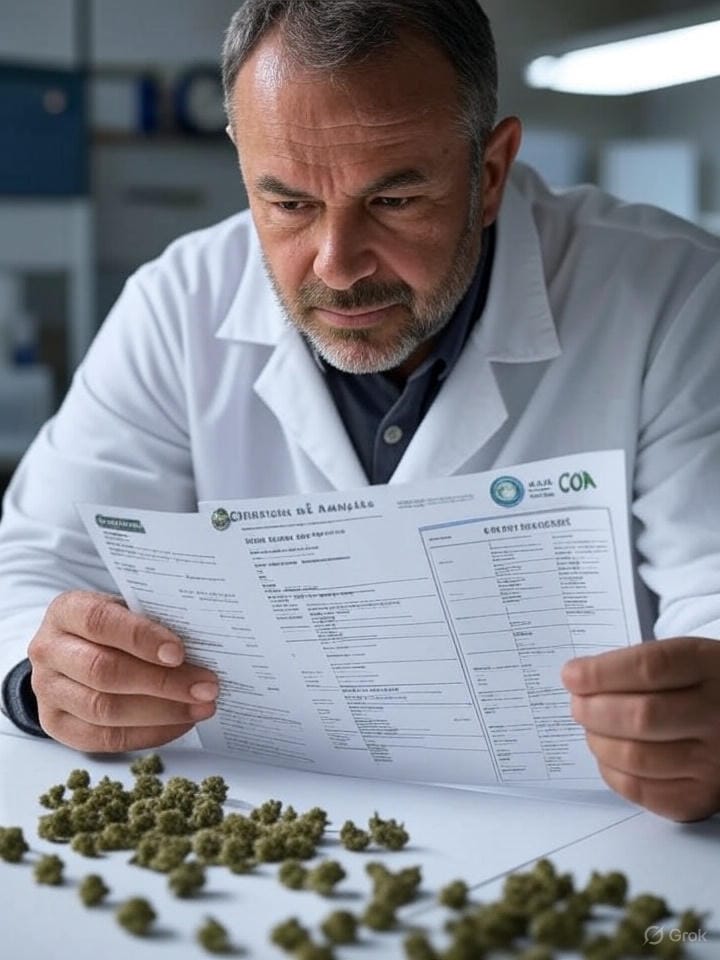
MYTHS AND REALITIES ABOUT CERTIFICATES OF ANALYSIS (COA) IN CANNABIS PRODUCTS
Certificates of Analysis (CoA) are essential documents in the cannabis industry. They provide verified information on the composition, safety and quality of cannabis products. However, despite their importance, there are numerous myths and misunderstandings surrounding these documents. MYTHS AND REALITIES ABOUT CERTIFICATES OF ANALYSIS (COA) FOR CANNABIS PRODUCTS can cause confusion among consumers, producers and distributors. In this blog post, we will explore the most common myths about CoAs. We will also debunk misconceptions and provide a science-based perspective, backed by research references and industry standards.
What is a Certificate of Analysis (CoA)?
A CoA is a document issued by an accredited laboratory detailing the results of tests performed on a specific batch of a cannabis product, such as flowers, extracts, edibles or topicals. It usually includes information on:
- Cannabinoid content: Percentages of THC, CBD, CBG, CBN and other compounds.
- Terpene profile: Aromatic compounds that contribute to the taste, odor and effects of the product.
- Contaminants: Presence of pesticides, heavy metals, mycotoxins, microbes or residual solvents.
- Purity and safety: Confirmation that the product complies with regulatory standards.
CoAs are essential to ensure transparency and safety in an industry where regulation can vary significantly between countries and regions. However, myths about their interpretation and use are common. Below, we address the most common ones.
Myth 1: “A CoA guarantees that the product is 100% safe”.
Reality:
A CoA is not an absolute guarantee of safety. It is a tool that reflects the results of specific tests performed at a given time. Laboratories test representative samples from a lot, but not every unit of product. Therefore, factors such as improper post-test handling, improper storage or cross-contamination can compromise the safety of the product, even if the CoA indicates that it is safe.
In addition, the quality of a CoA depends on the integrity of the laboratory . A study published in Journal of Cannabis Research (2021) found that some laboratories may inflate THC or CBD levels to meet the commercial expectations of producers. This is known as “lab inflation”(lab shopping). This highlights the importance of CoAs coming from laboratories accredited under standards such as ISO/IEC 17025, which ensure quality standards and consistency in testing.
Reference: Jikomes, N., & Zoorob, M. (2021). The cannabinoid content of legal cannabis in the United States: A comprehensive analysis. Journal of Cannabis Research , 3(1), 1-12. DOI: 10.1186/s42238-021-00088-1.
Myth 2: “A CoA with high THC or CBD levels means a better quality product”.
Reality:
THC or CBD content is not the only indicator of the quality of a cannabis product. While consumers tend to look for products with high concentrations of these compounds, other factors, such as terpene profile, absence of contaminants and freshness of the product, are equally important.
For example, terpenes such as myrcene or limonene can influence the effects of cannabis through the so-called “entourage effect”. In this effect, compounds work synergistically to modulate the effects of cannabinoids. A study published in Frontiers in Plant Science (2020) highlights that terpenes may have therapeutic properties of their own. These include anti-inflammatory or anxiolytic effects, underscoring their relevance to the overall quality of the product.
In addition, a CoA showing an extremely high THC or CBD content may be cause for suspicion. Some laboratories may manipulate the results. A product with unusually high THC levels may not comply with regulations in certain jurisdictions, limiting its legality.
Reference: Russo, E. B., & Marcu, J. (2020). Cannabis pharmacology: The usual suspects and a few promising leads. Frontiers in Plant Science , 11, 559. DOI: 10.3389/fpls.2020.00559.
Myth 3: “All laboratories produce reliable CoA”.
Reality:
Not all laboratories that issue CoAs are equally reliable. The quality of a CoA depends on the accreditation of the laboratory , the testing methods used and the integrity of its processes. In poorly regulated markets, some laboratories may lack the expertise or equipment necessary to perform accurate tests, leading to inconsistent results.
For example, an analysis published in Analytical Chemistry (2019) found significant variations in cannabinoid test results between laboratories. This was the case even when they analyzed the same sample. The variations may be due to differences in analytical methods, such as high performance liquid chromatography (HPLC) versus gas chromatography. Also due to lack of proper calibration of equipment.
To ensure the reliability of a CoA, consumers should look for laboratories accredited under international standards such as ISO/IEC 17025. In addition, CoAs should include details on test methods, detection limits and date of analysis.
Reference: Sexton, M., & Ziskind, J. (2019). Challenges in cannabis testing: A review of analytical methodologies. Analytical Chemistry , 91(12), 7359-7367. DOI: 10.1021/acs.analchem.9b01376.
Myth 4: “CoAs are only for CBD or THC products”.
Reality:
CoAs are not limited to products with THC or CBD, but are essential for any cannabis product. This includes those with other cannabinoids such as CBG, CBN or THCV, as well as hemp-derived products with low THC content. In addition, CoAs are critical to verify the absence of contaminants in all products, regardless of their composition.
For example, cannabis edibles must be tested not only for cannabinoid content. They must also detect microbial contaminants such as E. coli or Salmonella, which can pose health risks. A study in Journal of Food Protection (2020) found that cannabis edibles can be contaminated with pathogens. This occurs if they are not handled properly during production, highlighting the importance of CoAs in this type of product.
Reference: Taylor, S., & Birkett, J. (2020). Microbial safety of cannabis-infused edibles. Journal of Food Protection , 83(2), 238-247. DOI: 10.4315/JFP-19-368.
Myth 5: “An old CoA is still valid for current products”.
Reality:
A CoA is only valid for the specific batch that was tested and at the time the test was performed. Cannabis products may degrade over time. Factors such as exposure to light, heat or oxygen can alter their chemical composition. For example, THC can degrade to CBN, a cannabinoid with sedative effects, which changes the profile of the product.
An article in Cannabis and Cannabinoid Research (2022) states that cannabis products must be stored properly to maintain their chemical stability. CoAs should be renewed periodically to reflect the current quality of the product. Consumers should check the date on the CoA and ensure that it corresponds to the batch they are purchasing.
Reference: Wang, M., et al. (2022). Stability of cannabinoids in cannabis products under various storage conditions. Cannabis and Cannabinoid Research , 7(1), 65-73. DOI: 10.1089/can.2020.0088.
Myth 6: “CoAs are only for regulatory compliance”.
Reality:
Although CoAs are mandatory in many jurisdictions to comply with regulations, their purpose goes beyond legal compliance. They are a key tool for building consumer confidence by providing transparency on product quality and safety. In addition, CoAs help producers optimize their processes, identify quality issues and differentiate themselves in a competitive marketplace.
A study by Drug Testing and Analysis (2021) highlights that well-crafted CoAs can increase consumer confidence. They also encourage standardization in the cannabis industry, which benefits both producers and end users.
Reference: Giroud, C., et al. (2021). The role of certificates of analysis in the cannabis industry. Drug Testing and Analysis , 13(5), 879-885. DOI: 10.1002/dta.3023.
Tips for interpreting a CoA
To get the most out of a CoA, consumers and industry professionals should consider the following:
- Verify laboratory accreditation: Make sure the laboratory is accredited under standards such as ISO/IEC 17025.
- Check the date and lot number: Confirm that the CoA corresponds to the product you are buying and that it is not obsolete.
- **Analyzes contaminants **: Look for results on pesticides, heavy metals, mycotoxins and microbes to ensure safety.
- It includes the limits of detection: CoAs should state the limits of detection and quantification for each test, which ensures the accuracy of the results.
- **See the full profile **: Don’t just focus on THC or CBD; consider terpenes and other cannabinoids to assess overall quality.
Conclusion
Certificates of analysis are an indispensable tool in the cannabis industry, but it is crucial to understand their limitations and how to correctly interpret the information they provide. By debunking common myths and relying on scientific evidence, consumers can make informed decisions. Producers can improve the quality and transparency of their products. The key is to seek CoA from accredited laboratories, understand the results in context, and stay informed about scientific advances in cannabis testing.
If you wish to explore the subject further, please consult the references cited above or visit the websites of organizations such as the International Association for Cannabinoid Medicines (IACM) or the _American Herbal Products Association _ (AHPA) for more information on quality standards in the cannabis industry.